Notes DB 93: Theological Genocide - 2025
Sunday 24 August 2025 - Saturday 30 August 2025
[page 12]
Sunday 24 August 2025
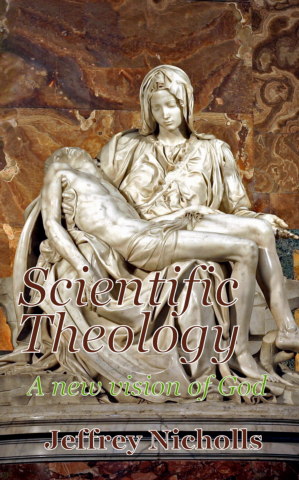
This book began as a memoire of the devastation one person by the perverse doctrine of the Roman Catholic Church and their recreation by the imagination of a new view of a divine world. It has been given a new relevance by the revelations of the damage done by the successive Trump administrations by the populist right
[page 13]
documented in Quinn Slobodian’s meticulous account of the intellectual foundations of the Neoliberal Roots of the Populist Right in his book Hayek’s Bastards. Th last half century the bastards have developed a plausible but false narrative of the ‘deep state’ built on rejecting the modern scientific understanding of our world and replacing it with the ancient fictions of imperial Christianity. My path to personal salvation may provide a key to the correction of this vicious perversion of reality. Quinn Slobodian (2025): Hayek's Bastards: The Neoliberal Roots of the Populist Right, Jeffrey Nicholls (2025): Cognitive Cosmogenesis: a systematic integration of theology and physics
Looking for a backstory: This book began to take shape in the first years of the twenty first century as the outcome of 40 years of reflection on my encounter with the imperial Roman Catholic Church that was born when the Emperor Constantine captured the Nicene version of Christianity to provide spirit for his empire etc etc etc. Constantine the Great and Christianity - Wikipedia
My task for this week: complete quantocracy as an antidote to the poisonous influence of Neoliberalism detailed in Quinn Slobodians book Hayek’s Bastards: The Neoliberal Roots of the Populist Right.
A Theory of Peace (1987): Afterword
The US has taken the North Korean Option: maximize nuclear armaments and withdraw from the World.
My simple model of the world is a speculation resting on three points. The first is the universality and simplicity of the initial singularity which has its origins in ancient philosophical snd theological speculations about
[page 14]
of the universe. This starting point is the foundation of the heuristic of simplicity. The universe started very simple, so the first steps in its emergence must be very simple. The second is the simplicity and universality of quantum mechanics, which we believe has the computational power at least equivalent to Turing computation whose modern implementation, in complex silicon chips is the phenomenon we call artificial intelligence.
The third feature of the universe is the Minkowski spacetime in which we live and act and whose definitive description is Einstein’s special theory of relativity. [This] governs all the engineering possibilities of our world ranging from steam engines and steelworks to microchips and the atomic and molecular structure of stars, Earth and all the forms of life that inhabit our planet.
In particular, special relativity constrains the structure of the instrumentation we use to understand our world, much of which, ranging from light and electron microscopes to the large Hadron Collider and all the other members of this species, are concerned with the microstructure of the universe encapsulated in the three forms of Quantum Field Theory, Quantum Electrodynamics, the Electro-weak theory and Quantum Chromodynamics. These theories are worked out in Minkowski space and constrained by the Einstein mass shell. On shell and off shell - Wikipedia
Given that quantum theory is the foundation of Minkowski space, and that not only are all our observations in Minkowski space, but also that the Dirac equation is the foundation of spacetime structure, we must imagine that the Dirac equation shows us the shape of the quantum mechanical
[page 15]
structure that accounts for Minkowski space, and this leads us to the study of fermions and bosons. Once we understand the quantum foundations of these particles we have a comprehensive theoretical foundation to understand the world.
The radical difference between quantum mechanics and classical (Einstein / Newton) mechanics is that quantum mechanics is linear and complex and classical is real and quadratic. Our key to understanding quantum mechanics is measurement and observation in classical mechanics and the [mathematical] bridge between them [at low energies] are the energy operator [H] and the momentum operator [−∇] encapsulated in the Schrödinger equation. Schrödinger equation - Wikipedia
This interface is where we have devised quantum field theory to connect the quantum foundations of the world with its classical surface and the simplest and most universal version of this connection is the coupling between quantum mechanics and the [linear] democratic politics of quantum particles of all degrees of complexity.
Monday 25 August 2025
The zero energy universe hypothesis explains the conservation of energy since ‘positive’ kinetic energy and ‘negative’ potential energy are created in precisely equal quantities as we see in a gravitational harmonic oscillator like a pendulum, This hypothesis also explains the utility of the Lagrangian since in that formulation the lagrangian KE - PE, treating PE as positive also eplains why the Lagrangian has
[page 16]
a fixed point at zero. We may look a little deeper and interpret potential energy as binding energy equivalent to the kinetic energy of the bound particle [ie when an electron changes orbits the associated photon energy is equivalent to the energy change of the electron]. This idea is considered by Behiel when he claims that 99% of your mass is pure QCD energy (Behiel_2025_09_21, a finem] Richard Behiel (2025_08_21): The Strong Nuclear Force as a Gauge Theory, Part 5: The QCD Lagrangian
We would like to think, however, that the total energy of the universe remains zero so we would expect QED, QCD Lagrangians to be zero. How does this change QFT? The truth may be that it has zero energy anyway since the idea that quantum fluctuations created energy is meaningless, instantly solving the cosmological constant problem. Cosmological constant problem - Wikipedia
All these ideas seem to fit together but are they too complex to put in a political science paper? Why not? They are no more outrageous than the ‘biological’ input that the populist right relies on. So just do it. Argue for my assertions, beginning with the zero energy Aquinas-Einstein initial singularity.
Slobodian page 53: Rothbard: “Outreach to the Rednecks”
Page 61: Jared Taylor: ‘Australian Aborigines have the world’s smallest brains’.
Culutre wars. I have difficulty getting interested in politics but I feel that I must squeeze all the juice out of Slobodian to make quantocracy feel like a clear rebuttal of the ‘Populist Right’ which denies the reality of the world and rejects the scientific picture that sensible people live by, the extraordinary power and value of RNA vaccine, for instance.
[page 17]
Maybe I learn something about the ‘deep state’ from Deighton’s spy stories lavishly laced with distrust of
government and political power. Josephine Ma (2025_08_04): Open Questions | Jeffrey Sachs says US sabre-rattling at China can become self-fulfilling prophecy of war, Len Deighton (1986): Berlin Game, Mexico Set and London Match
One sees why the physicists like mathematics because counting, measuring and calculating give definite answers that gain credibility by their internal consistency. Since I am not very mathematical I like Feynman’s idea that we need to have a credible model of what is going on before we begin to attach numbers to it. This is where I have trouble with quantum field theory and Feynman diagrams. The magnetic moment of the electron we an imagine as a very simple thing explained by Qiu-Hong’s model of the electron which gives a simple value consistent with the heuristic of simplicity but when we begin to apply Feynman’s diagrams we no longer seem to be dealing with simple electron but with a vast crowd of electrons all having more or less influence on one another, The results measure the values associated with an electron interacting in Minkowski space through s broad spectrum of conversations with other electrons [mediated by photons]. Feynman, Leighton and Sands FLP II_02: Chapter 2: Differential Calculus of Vector Fields, Qiu-Hong Hu (2005_12_29): The nature of the electron
How does this appear in quantum mechanics itself? In high dimensional Hilbert spade with superpositions of large numbers of vectors with different weights normalized so that the output of the conversation, like this stretch of text, has a unitary distribution of written characters with a very subtle overall message. One can imagine the vast spectrum of subtlety that underlies a 50 year marriage between two people, the plot of a vast novel like the complete works of Shakespeare in dialogue with his lifetime of actors and audiences as his written works are energized with human spirit to become living dramas. Ted Hughes (1993): Shakespeare and the Goddess of Complete Being
[page 18]
Or, on a much smaller scale, the meaning carried by Deighton’s series of stories Game, Set and Match. How would we represent this as a set of Feynman diagrams for a single ‘electron’, ‘Bernard Samson’.
Does this story hold water? Am I right to disparage quantum field theory? This approach is implicit in the decision to make quantum theory fundamental to Minkowsky space and attribute the existence of Minkowski space to the distinction of particles into fermions and bosons.
This distinction, I claim, is well within the formal computational power of quantum mechanics in Hilbert space as indicated by the claim that quantum computation may be at least as powerful as Turing computation, or more so. Given this point we have stipulated the political implications of quantum mechanics. We can assume that, given the availability of energy from the zero sum bifurcation of gravitation, gravity and quantum mechanics are capable of creating a universe and using the principle of symmetry with respect to complexity we can see the creation of human communities, with the people interpreted as fermions and their acts of business and social intercourse as bosons, we can attribute similar creative interactions to elementary bosons and fermions, QED,
Deighton page 510: ‘Women have personal relationship. They don’t give loyalty to abstractions the way men do.’ The universe is female, and all its particles interact one-on-one, one quantum of action at a time.
Tuesday 26 August 2025
Athough the construction and operation of scientific instruments in constrained by classical special relativity in Minkowski space, the fact that all the computation or logical operations are executed by the universe in Hilbert space means that our understanding of the world is fundamentally based on the quantum mechanics of Hilbert space which is, unfortunately, invisible to us, so we must speculate about how it works in order to explain our measurements. The [current] root of this speculation is quantum field theory and the theory divides the spectrum of possible quantum mechanical operations into those which conform to the energy and momentum constraints of special relativity which demand that the inner product of four-momentum with itself must conform to the real arithmetical quadratic equation
p.p = (mc)2 = (E2 / c2) − p2
Since there is no space and time in Hilbert space, many of the operations in this space do not confirm to special relativity and are said to be off mass shell. Quantum field theory has been devised, as Weinberg explains, to deal with the problem of interfacing special relativity and quantum mechanics snd it employs the idea of virtual particles which serve as intermediate processes to explain the observed outcomes in real space, and the virtual particles, being purely quantum mechanical fictions, are not required to obey special relativity. In this way QFT exploits the hidden degrees if freedom attributed to quantum mechanics to explain the observed behaviour of real elementary particles and the complex structures built from these elementary particles like atoms and molecules. On shell and off shell - Wikipedia. Steven Weinberg (1995): The Quantum Theory of Fields Volume I: Foundations, page 49
[page 20]
Robert Reich (2025_08_25): Why Trump built a staff of incompetent sycophants
I have three features of quantum mechanics to harness to freedom and democracy in politics. The first, discussed in Cognitive cosmogenesis Chapter 27: The political consequences of physical theology is the reliance of quantum mechanics on phase, that is direction, which can be interpreted as political direction, which is encoded by a normalized stationary eigenvectors in a multidimensional real space which nay be simple enough to describe elementary fermions and bosons or complex enough to describe people or even planets, galaxies or the universe. Carrying the vectors that describe this direction, particles have both freedom and autonomy.
Drama: each character comes on the scene and adds a little piece to the story until the picture is complete. We want to create a quantum mechanical drama for the political scientists.
Wednesday 27 August 2025
Am I convinced? Major argument arises from linearity of voting and in quantum mechanics voting is both mandatory and ranked choice, suggested by the Born Rule applied to the distribution of opinion in a community seen as one particle, a feature implicit in symmetry with respect to complexity.
The deep question we want quantum mechanics to answer is what motivated it to create the universe and the means that it has used to
[page 21]
do so. This is the same question that we face in creating human societies: motivation and opportunity. We are motivated by reward. We understand reward psychologically, as I did when I joined the Dominican order in order to be rewarded in heaven despite the fact that I believed that my natural desire for erotic pleasure was sinful. This belief was exogenic, I might say forced on me by a religion whose attitude to pleasure had been developed by Paul of Tarsus. Paul of Tarsus: Galatians, 5:16-24
We may guess that the rulers of the world reserve all pleasure for themselves by curtailing the pleasures of those they rule. Generally we believe that the non-human world has no psychology but when we examine our environment, as Aristotle did, we see that ‘nature’ is in effect psychological, it is the tendency built into things that controls the way they act.
In a world that has created itsef without any help from an omniscient divinity to make the plans this natural tendency must go back to the beginning and so we expect to find it in the initial singularity, a product of gravitation and quantum mechanics, quantocracy, self rule at the level of elementary particles, the modern equivalent of Aristotle’s ideas about the tendencies of the five elements.
This is the idea I want to capture in my political science essay, and in some way Deighton’s spy stories about the conflict between capitalism and communism are leading me to become more aware of the fundamental vision of theology, the relationship between potential and action which is hidden in the nature of gravitation, the soul of the pendulum, the simple harmonic motion which lies at the heart of reality. How do I capture this? First through my simple model of cognitive cosmogenesis and then by a revelation of the way that this psychology is the theological explanation of physics.
[page 22]
Revelations like this are a suitable reward for a day of apparent idleness. As a builder I built using psychological models to control my action, which is the eternal root of productivity which we see as the source of all pleasure. I just have to clarify all this to the point where I can effectily preach it. Starting at the beginning, as Aristotle saw, is the beginning. Having clear and distinct ideas , as Descartes and Feynman saw, is the next step. The quantum source of clear and distinct ideas are hermitian operators. This all makes sense in my mental environment, but explaining the whole picture is not do easy, although I feel that my book is a vert good beginning, the fruit of 60 years of intense action and contemplation.
Capitalism + communism ≡ socialism.We are replacing an omniscient divinity with omnipotence and logic enforced by consistency. That is the creation story. Now we apply it to a critique of the failures of quantum field theory. I try this out with political scientists and then give it a run with physicists.
The heuristic of simplicity is somewhat alien to many physicists because the Judaeo-Christian story of creation by an omnipotent and omniscient god is second nature to them and they are not surprized to find that the fundamental structure of the universe is exceedingly complex and tricky, as one might expect from such a god. The big bang theory seems to point to the opposite direction, but it is consistent with the ancient Christian idea because all the fields and particles and the complexity of the electro-weak theory and the mysterious disappearance of anti-matter and so on appear to point
[page 23]
to am omniscient creator even though this very complex structure is imagined to have condensed and ‘crystallized’ out of the enormously hot and simple bang because it was in some way implicit in the initial conditions of the bang. My alternative, an omnipotent but random agent guided only by logical impossibility seems (to me) just as plausible since it naturally explores the whole space of consistent possibility which is the ancient mark of omnipotence. Aquinas, Summa I, 25, 3: Is God omnipotent?
It takes a long time for things to come clear to me. I have been 60 years on this job and writing these notes since the early 80s and I think they contain at least one new idea a week, so that’s 45 yeas of weeks, 2200 ideas, and I feel that I am slowly getting the point and looking forward to at least 15 more years of relative sanity to get it all down.
Thursday 28 August 2025
Slobodian page 64: ‘Arguments about politics always rest upon claims about human nature.’ Or deeper, upon claims about reality, like climate change.
page 100: ‘The bell curve is usually engaged on the terrain of science. I engage it on the terrain of capitalism’ . . . ‘I trace its lineage to the alliance of a rump of race scientists and libertarians who kept the flame of IQ racism alive after the world’s traumatic reckoning with race science after the horrors of National Socialism.
Stanford University and the “Palo Also System”. Stanford University - Wikipedia
[page 24]
Slobodian page 108: The worlds of IQ race science and paleolibertarianism were woven together in the United States in the 1960s and 1970s.
page 110: Herrnstein, Atlantic R. J. Herrnstein: IQ Testing and the Media
page 117: Affirmative action: “leaking a poison into the American soul.”
page 122: ‘The neurocaste is an epistemology in search of a philosophy of governance.’
page 129: ‘ Thus far this book deals with two of the three “hards” of the new fusionists: hard borders and hardwired human difference. Each of these opened a door for collaboration between neoliberals and those further to the right. This chapter turns to the third hard: hard money. Monetary issues have long divided neoliberals.’
page 136: ‘ The history if libertarianism in the US cannot be separated from the businenn of selecting collectible coins.’
page 139: Roman Polansky: Rosemary’s Baby
page 147: Milton Friedman: “there is evidence that a democratic society, once established, destroys a free economy.”
page 149: ‘ “The three hards”, hard money, hard borders and hardwired culture were central to paleo ideology.’
page 155: ‘Like catastrophe libertarians before him, Boehringer was adept at forecasting the cracking while making his own serices indispensible when the time came. He wrote that
[page 25]
while the timing could not be predicted with precision, “the citizens of the western world can count on a systemic collapse”.’
Friday 29 August 2025
My Essay on the Divinity of Money flirts with the danger of enabling the unconstrained pursuit of wealth which appears to sum up the neoliberal roots of the populist right. Their principal motivation is to get and keep money for themselves and make sure that none of it goes to support social systems such as health care, pensions, unemployment benefits and all the other causes of social security. My quantum mechanical pursuit of freedom and democracy also opens a door to perversion, but the key point, I am beginning to see, is that communication is an essential feature of reality, beginning with the codeless universal communication of gravity, whose ability to cause black holes illustrates the dangerous feature of excessive accumulations of money. [It is] balanced by the creative power of quantum mechanics, which bifurcates gravitation into the bound kinetic energy that characterizes massive fermions ,and the free potential energy that is the foundation of communication, stability, potential wells, taxation, socialism and a coded version of the universal attraction of gravitation which has served to create the universe and ourselves within it,
This insight . . . makes sense of the split into kinetic and potential energy, reveals the essential role of potential energy, and leads us away from the potential dangers of money and energy exploited by the neoliberal misunderstanding of the nature of the universe. The clue to this insight is centered in the field theoretical idea outlined by Behiel that the symmetry built into communication, ie the symmetry of electrons and photons which preserves [unitarity and] the Lagrangian of quantum field theory. Richard Behiel: Electromagnetism as a Gauge Theory
Now to the shops and buy a new mug [to replace the one I smashed while waking up this morning].
[page 26]
The political implementation of the simple model provided here begins with the cosmological constant problem, which appears to invalidate the whole construction of quantum field theory. The salient point of the story above is the reversal of the roles of quantum mechanics and special relativity. We have noted that fermions and bosons are products of the interplay of gravitation and quantum mechanics and that between them these particles are responsible for the metric of Minkowski space which is the key, through difFerential geometry, to the general theory of relativity which describes the overall structure of the universe.
Now I have a new perspective so a new transformation arises. My book is a work of poetry and music, a pleasant sexy dream to cap off a long period of sub-optimal life caused initially by my ‘vocation’ to the monastic life. Now comes the political and scientific work to make it real and I have to get a role for the second part of quantocracy, built as a sort of political lagrangian, establishing, as in physics, how potential energy creates the communication that neutralizes the kinetic energy of the massive particles through the community of momentum.
The new perspective, given what I have learnt from Slobodian, enables me to put my finger on two major errors in modern pseudoscience which are often being used to support neo-liberal ideas and the populist right. The first is quantum field theory, a pragmatic but erroneous byproduct of the rush for nuclear weapons, and the second is artificial intelligence using classical Turing computation which overlooks the natural intelligence of quantum mechanics.
[page 27]
Chomsky interview - rubbishes current large language models but does not hurt (or even mention) my favourite idea that quantum mechanics is the answer except to say that babies looking for speech among noise are looking for rhythm just as (we might say) vision is looking for connected structures. First quantum mechanics studies the rhythm [de Broglie] and finds the stationary points that are fermions and bosons [Pauli] which build spatial structure. Yarden Katz (2012_11_01): Noam Chomsky on Where Artificial Intelligence Went Wrong, Louis de Broglie (1929): Nobel Lecture: The Wave Nature of the Electron, Pauli exclusion principle - Wikipedia
Saturday 30 August 2025
Quantocracy Conclusion. Documentary history and archaeology have revealed to us a repeated cycle over the last 10 000 years or so of imperial magnificence built by military power working under some sort of mandate from heaven coming to an end through corruption and the rise of countervailing power. In each cycle millions of people have been killed and enslaved in the accumulation and defence of imperial wealth and power. In the latest cycle the genocidal axis of Nazi Germany and Japanese imperialism was defeated by the combined efforts of the British, Soviet, Chinese and US empires, leaving to 80 years of relative peace, a huge increase in global population and much improvement in health and welfare for many people, but the imperial desire to accumulate and protect wealth has lived on and we are witnessing a resurgence of theocratic autocracy which justified the creation of empires.
Quinn Slobodian has documented the neoliberal root on the populist right in the current global (but fading) hegemon that came to power after the devastation of the Second World War.
[page 28]
History teaches us that power corrupts and suggests that corruption, in the form of denial of reality, is taking hold in the United States. Imperial powers, beginning from the time of Galileo, have ridden on the back of science. Nazi power depended heavily on on the scientific development of superior weapons. The discovery of nuclear energy in wartime Germany prompted the rapid development of the nuclear weapons that ended the Pacific war and led us into a new phase of Mutual Assured Destruction which has enabled the nuclear powers to chase their imperialist dreams under the protection of a nuclear umbrella. The only way out of this impasse is to rethink the doctrine of theocratic autocracy that has traditionally underlain claims of imperial magnificence.
From the point of view of political power the dominant global theology is Christianity, matched only by the ancient Chinese ‘secular’ doctrine of the rule of heaven. Christianity and its Hebrew predecessor are at present at the foundation of the wars of holy genocide being waged by Putin’s Russia against Ukraine and Netanyahu’s Israel against the indigenous Palestinians of the Holy [Promised] Land.
The point of this essay is that the ancient Judaeo-Christian theology [espoused by the Roman Catholic Church] contradicts the reality of the universe we inhabit. Its source is eternal and it has created itself through eternal omnipotence and the fundamental constraint on omnipotence, the impossibility of inconsistency. The physical foundations of creation are explained in this article are. without doubt, gravitation and quantum
[page 29]
mechanics, and these forces between them point to a world of free and autonomous particles whose natural creative process is the democratic communication at the human foundation of real politics identified by Jesus of Nazareth: love the universal divine environment; love every entity within it, including ourselves. Code of Canon Law 331-333: The Roman Pontiff
This is in effect the political foundation of my book, to be further developed in a parallel submission to Foundations of physics. I have been worrying about quantocracy since the end of July snd have now convinced myself to complete it and submit it to Frontiers in Political Science.
Addition to quantocracy abstract:
The second portion of this paper draws on the notions of symmetry which lie at the root of modern physics to point out the political consequences of quantum theory which support freedom and democracy at all scales and explain the . . . magnificence of the divine universe we inhabit.
Now, will quantum mechanics survive in a future final theory of physics? I guess that it will, partly because of the enormous success that it has had overt he last sixty years, but even more so because of the sense of inevitability that quantum mechanics gives us. [. . .] But quantum mechanics is not enough. Quantum mechanics is not itself a dynamical theory. It is an empty stage. You have to add the actors. You have to specify the space of configurations, an infinite dimensional complex space, and the dynamical rules of how the state vector rotates in this space as time passes. Increasingly, many of us have come to think that the missing element in quantum mechanics is a principle, or several principles, of symmetry. [. . .] The set of all these changes in point of view is called the symmetry group of nature. It is increasingly clear that the symmetry group of nature is the deepest thing that we understand about nature today. Steven Weinberg (1986): The 1986 Dirac Memorial Lecture: Toward the Final Laws of Physics (Weinberg page 70)
|
Copyright:
You msay copy this material freely provided only that you quote fairly and provide a link (or reference) to your source.
Further readingBooks
Deighton (1986), Len, Berlin Game, Mexico Set and London Match, Cresset Press /Random House 1989 'Once again Deighton has woven an ntricate and wholly satisfying plot, peopled it with covincing characters and even managed to givr a new twist or two into the spy story. But then he is a master of the form Ross Thomas, Washgington Post
Amazon
back |
Hughes (1993), Ted, Shakespeare and the Goddess of Complete Being, Faber & Faber 1993 ' Synopsis
In this momentous adventure in criticism, one of the leading poets writing in English argues that our profound response to Shakespeare's great late plays is prompted by a mythic, symbolic structure that inheres in each of them, and indeed binds the entire Shakespearean corpus into one huge, complex, ever-evolving work. Ted Hughes sees Shakespeare's early poems Venus and Adonis and The Rape of Lucrece as embodying two great myths of the archaic world, that of the hero who rejects the love of the Goddess and is killed in revenge by a boar; and that of the king, or god, whose crime is rape and whose punishment is banishment. These two complexes merge as Shakespeare's work develops into what Hughes calls the Tragic Equation, a flexible formula through which the poet was able to tap into the innate power of these myths to enliven his own imagination - and through him the imagination of Elizabethan England, in which the conflicts between Catholicism and Protestantism in the "living myth" of the English Reformation never lay far from the bloody surface of events. With his characteristic mixture of erudition and immediacy, Ted Hughes traces this idea in a close reading of Shakespeare's entire work. This text originally grew out of correspondence with dramatists, and anyone for whom intimate attention to the plays is important - scholar, student, actor, or common reader - will profit greatly from Hughes's loving, intensive, engrossing, and radical analysis of the greatest writing in the language.'
Amazon
back |
Nicholls (2025), Jeffrey, Cognitive Cosmogenesis: a systematic integration of theology and physics, Austin Macauley 2025 ' The core idea of the top down theology devised by the Christian bishops for the Emperor Constantine is that the omnipotent and omniscient creator totally controls every moment of every event in the world. The imperial picture. Here we work from the bottom up. A key to the connection of physics and theology is symmetry with respect to complexity.
Although the difference in scale between fundamental particles and the people of an ideal democratic polity is immense, they are formally quite similar. Both democratic politics and quantum electrodynamics work in Hilbert space. Voting is linear, a form of superposition distributed by parties. Individuals and political parties are characterized by their directions in political space which may be modelled by vectors in a Hilbert space.
We may imagine a space with a basis vector for every person. Their sums in various combinations present us with a comprehensive picture of the political directions in an electorate. Such ideal democratic political systems have natural quantum mechanical support which gives us insight into the nature of the world.'
Amazon
back |
Slobodian (2025), Quinn, Hayek's Bastards: The Neoliberal Roots of the Populist Right, Penguin, Allen Lane 2025 ' In this work of historical erudition and sharp political analysis, Quinn Slobodian explains how the myth of neoliberal freedom can be sustained only through a deeply illiberal world view. Through a painstaking reconstruction of how Hayek's offspring appeal to science served to naturalize hierarchy, and resist the calls for social equality, we come to see how rightwing authoritarianism emerged not as an alternative to neoliberalism but as its brainchild. An essential read to understand the times in which we live ― Lea Ypi
Amazon
back |
Weinberg (1995), Steven, The Quantum Theory of Fields Volume I: Foundations , Cambridge University Press 1995 Jacket: 'After a brief historical outline, the book begins anew with the principles about which we are most certain, relativity and quantum mechanics, and then the properties of particles that follow from these principles. Quantum field theory then emerges from this as a natural consequence. The classic calculations of quantum electrodynamics are presented in a thoroughly modern way, showing the use of path integrals and dimensional regularization. The account of renormalization theory reflects the changes in our view of quantum field theory since the advent of effective field theories. The book's scope extends beyond quantum elelctrodynamics to elementary partricle physics and nuclear physics. It contains much original material, and is peppered with examples and insights drawn from the author's experience as a leader of elementary particle research. Problems are included at the end of each chapter. '
Amazon
back |
Links
Aquinas, Summa I, 25, 3, Is God omnipotent?, '. . . God is called omnipotent because He can do all things that are possible absolutely; which is the second way of saying a thing is possible. For a thing is said to be possible or impossible absolutely, according to the relation in which the very terms stand to one another, possible if the predicate is not incompatible with the subject, as that Socrates sits; and absolutely impossible when the predicate is altogether incompatible with the subject, as, for instance, that a man is a donkey.' back |
Code of Canon Law 331-333, The Roman Pontiff, ' Can. 333 §1. By virtue of his office, the Roman Pontiff not only possesses power over the universal Church but also obtains the primacy of ordinary power over all particular churches and groups of them. Moreover, this primacy strengthens and protects the proper, ordinary, and immediate power which bishops possess in the particular churches entrusted to their care.
§2. In fulfilling the office of supreme pastor of the Church, the Roman Pontiff is always joined in communion with the other bishops and with the universal Church. He nevertheless has the right, according to the needs of the Church, to determine the manner, whether personal or collegial, of exercising this office.
§3. No appeal or recourse is permitted against a sentence or decree of the Roman Pontiff.' back |
Constantine the Great and Christianity - Wikipedia, Constantine the Great and Christianity - Wikipedia, the free encyclopedia, ' During the reign of the Roman Emperor Constantine the Great (AD 306–337), Christianity began to transition to the dominant religion of the Roman Empire. Historians remain uncertain about Constantine's reasons for favoring Christianity, and theologians and historians have often argued about which form of early Christianity he subscribed to. . . . Constantine's decision to cease the persecution of Christians in the Roman Empire was a turning point for early Christianity, sometimes referred to as the Triumph of the Church, the Peace of the Church or the Constantinian shift. In 313, Constantine and Licinius issued the Edict of Milan decriminalizing Christian worship. The emperor became a great patron of the Church and set a precedent for the position of the Christian emperor within the Church and raised the notions of orthodoxy, Christendom, ecumenical councils, and the state church of the Roman Empire declared by edict in 380. He is revered as a saint and is apostolos in the Eastern Orthodox Church, Oriental Orthodox Church, and various Eastern Catholic Churches for his example as a "Christian monarch”.' back |
Cosmological constant problem - Wikipedia, Cosmological constant problem - Wikipedia, the free encyclopedia, ' In cosmology, the cosmological constant problem or vacuum catastrophe is the disagreement between the observed values of vacuum energy density (the small value of the cosmological constant) and theoretical large value of zero-point energy suggested by quantum field theory.
Depending on the Planck energy cutoff and other factors, the discrepancy is as high as 120 orders of magnitude, a state of affairs described by physicists as "the largest discrepancy between theory and experiment in all of science" and "the worst theoretical prediction in the history of physics".' back |
Elisdsa Strauss (2025_08_28), A New Theory Puts Parenting at the Center of Human Evolution, ' In The Origin of Language, Madeleine Beekman, a professor emerita of evolutionary biology and behavioral ecology, considers human evolution through the often-neglected lens of child-rearing, bringing a relatively new perspective to the field. Throughout the late 19th and 20th centuries, most popular theories of evolution focused on male-dominated, and in many cases aggressive, activities such as hunting, fighting, toolmaking, and semen-spreading to understand our development as a species. [. . .]
Beekman begins the book by tracing the evolutionary steps that made language possible—and necessary. First came the biological changes to the human body, genetic mutations followed by natural selection. At one point during our transition from ape to human, our heads shifted position so we could stand erect, and our vocal cords elongated, which then allowed us to make a wider variety of sounds. (Lest you believe evolution always knows best, these changes also made it very easy to choke. Today, choking is the fourth leading cause of unintentional death. [ . . ]
What does this have to do with language? Beekman ties it all together like this: Early humans were giving birth to deeply vulnerable and demanding offspring, and they couldn’t manage with the tools they had; this is where vocal cords came in handy. In time, Beekman argues, people strung together noises—pah, mah, kah, dah, and so on—into words, and then structured those words into syntax and grammar, in order to help them cooperate and communicate, first and foremost, with and about their offspring.' back |
Feynman, Leighton and Sands FLP II_02, Chapter 2: Differential Calculus of Vector Fields, ' What it means really to understand an equation—that is, in more than a strictly mathematical sense—was described by Dirac. He said: “I understand what an equation means if I have a way of figuring out the characteristics of its solution without actually solving it.” So if we have a way of knowing what should happen in given circumstances without actually solving the equations, then we “understand” the equations, as applied to these circumstances. A physical understanding is a completely unmathematical, imprecise, and inexact thing, but absolutely necessary for a physicist. ' back |
Josephine Ma (2025_08_04), Open Questions | Jeffrey Sachs says US sabre-rattling at China can become self-fulfilling prophecy of war, ' The United States learned that it can’t impose its will on China. The rare earths threat by itself was enough to cause the US to reconsider. So, almost immediately after putting on the high tariffs, the US backed down. And both sides know that each has some chokeholds on the other. For that reason, we might expect the two sides to maintain certain limits on the trade frictions in the years ahead. There will be, therefore, some kind of agreement, but it won’t stick in the details, and frictions will continue to wax and wane, with neither side definitively imposing its will on the other. The basic reason is that both sides have a mutual gain from continued trade. I’m hopeful that a measure of rationality will therefore prevail.
The biggest challenge, of course, is the behaviour of the US. The US started this trade war. This is not two sides fighting each other, but rather the US fighting China. We should remember that. The US needs to show some prudence at this point. I do suspect that there is a chastened view among many senior US officials. Trump himself is unpredictable. He has a very short attention span. Agreements with Trump don’t stick. So, I don’t foresee a quiet period, but I do foresee some limits to the competition because each side can do damage to the other and both sides have a strong reason to achieve some cooperation. [. . .]
The individual feuds don’t mean very much. Breaking with Musk does not mean breaking with Silicon Valley. Silicon Valley put Trump back into the White House with enormous financial backing for Trump’s campaign. There are still tens of billions of dollars of government contracts going also to Elon Musk, Peter Thiel and other Big Tech operators. [. . .]
US arrogance deeply worries me. Trump certainly is not a strategist. There’s no long-term plan. The US is playing poker, but not very well or wisely. It often bluffs. The whole approach can lead to war.' back |
Louis de Broglie (1929), Nobel Lecture: The Wave Nature of the Electron, ' The necessity of assuming for light two contradictory theories-that of waves and that of corpuscles - and the inability to understand why, among the infinity of motions which an electron ought to be able to have in the atom according to classical concepts, only certain ones were possible: such were the enigmas confronting physicists at the time I resumed my studies of theoretical physics.
Now a purely corpuscular theory does not contain any
element permitting the definition of frequency. This also renders it necessary in the case of light to introduce simultaneously the corpuscle concept and the concept of periodicity.
On the other hand the determination of the stable motions of the electrons in the atom involves whole numbers, and so far the only phenomena in which whole numbers were involved in physics were those of interference and of eigenvibrations. That suggested the idea to me that electrons themselves could not be represented as simple corpuscles either, but that a periodicity had also to be assigned to them too. . . .
Thus to describe the properties of matter as well as those of light, waves and corpuscles have to be referred to at one and the same time. The electron can no longer be conceived as a single, small granule of electricity; it must be associated with a wave and this wave is no myth; its wavelength can be measured and its interferences predicted.
It has thus been possible to predicta whole group of phenomena without their actually having been discovered. And it is on this concept of the duality of waves and corpuscles in Nature, expressed in a more or less abstract form, that the whole recent development of theoretical physics has been founded and that all future development of this science will apparently have to be founded.' back |
Mariana Lenharo (2025_08_27), An abiding mystery of the French Revolution is solved — by epidemiology, ' In 1789, rumours spread like a virus across France: gangs of bandits were attacking villages, destroying crops and terrorizing peasants, mobilized by nobles trying to suppress political unrest. None of it was true. But the resulting panic and upheaval, called the Great Fear, helped to fuel the French Revolution — and provoked a debate that still divides historians.
Did a deliberate effort to advance revolution drive the rumours? Or did they emerge spontaneously, driven by genuine terror? Now, scientists have used the methods of epidemiology to solve the mystery. Drawing on historical records and models developed to trace epidemics, researchers conclude that the fearmongering had rational, not emotional, roots1. “We managed to identify the logic behind the dissemination of the Great Fear,” says Antoine Parent, an economist at University Paris 8 and a co-author of the study, published today in Nature. [. . .]
The social, economic and political features of the locations most susceptible to receiving rumours reveal the rationale behind the dissemination, the authors say. For example, there was greater susceptibility to the rumours in provinces where physical destruction of land registers would cost the feudal lord their property ownership than in provinces where that was not the case. This suggests that the fearmongering deliberately targeted areas where the destruction of land registers would be more consequential.
Towns with higher rates of literacy were also more likely to experience the Great Fear than less-literate communities, contradicting the view that the rumours were spread mostly by ignorant peasants driven by emotion. back |
Natasha Lindstaedt (2025_08_23), Why a new ‘iron curtain’ is being built across Europe. This time it’s to keep Russia outWhy a new ‘iron curtain’ is being built across Europe. This time it’s to keep Russia outWhy a new ‘iron curtain’ is being built across Europe. This time it’s to keep Russia out, ' n 1946, Winston Churchill announced an “iron curtain” had descended across Europe “from Stettin in the Baltic, to Trieste in the Adriatic”. This time it is the west that is building the barriers.
Every European nation bordering Russia and its ally Belarus is accelerating plans to construct hundreds of miles of fortified border to defend against possible Russian aggression.
The reasons are clear. The post-cold war European security framework – which relied on strengthening international institutions and trade, Nato expansion and US military guarantees – is being eroded.
Finland
Sharing an 832-mile border with Russia, Finland proposed building a wall in 2023 that would cover about 15% of its border, costing over US$400 million (£297 million) and with hopes that it will be completed by 2026.
Motivated in part by Russia’s invasion of Ukraine in 2022, but also due to a rise of Russians fleeing to Finland to escape conscription. Finland’s government passed a law in July 2023 to build stronger and taller fences, as the previous wooden fences were designed only to prevent livestock from crossing. Eight border posts were erected (including north of the Arctic Circle) alongside greater obstacles in the southernmost strip of the country.
There are even defences being erected in remote areas of north-eastern Finland, where in the not-too-distant past, a steady flow of Russian and Finns would regularly come and go across the border to buy groceries. back |
On shell and off shell - Wikipedia, On shell and off shell - Wikipedia, the free encyclopedia, ' In physics, particularly in quantum field theory, configurations of a physical system that satisfy classical equations of motion are called on shell, and those that do not are called off shell.
In quantum field theory, virtual particles are termed off shell because they do not satisfy the energy–momentum relation; real exchange particles do satisfy this relation and are termed on shell (mass shell). In classical mechanics for instance, in the action formulation, extremal solutions to the variational principle are on shell and the Euler–Lagrange equations give the on-shell equations. Noether's theorem regarding differentiable symmetries of physical action and conservation laws is another on-shell theorem.' back |
Paul of Tarsus, Galatians, 5:16-24, '16 But I say, walk by the Spirit, and you will not gratify the desires of the flesh. 17 For the desires of the flesh are against the Spirit, and the desires of the Spirit are against the flesh, for these are opposed to each other, to keep you from doing the things you want to do. 18 But if you are led by the Spirit, you are not under the law. 19 Now the works of the flesh are evident: sexual immorality, impurity, sensuality, 20 idolatry, sorcery, enmity, strife, jealousy, fits of anger, rivalries, dissensions, divisions, 21 envy, drunkenness, orgies, and things like these. I warn you, as I warned you before, that those who do such things will not inherit the kingdom of God. 22 But the fruit of the Spirit is love, joy, peace, patience, kindness, goodness, faithfulness, 23 gentleness, self-control; against such things there is no law. 24 And those who belong to Christ Jesus have crucified the flesh with its passions and desires.' back |
Pauli exclusion principle - Wikipedia, Pauli exclusion principle - Wikipedia, the free encyclopedia, 'The Pauli exclusion principle is the quantum mechanical principle that no two identical fermions (particles with half-integer spin) may occupy the same quantum state simultaneously. A more rigorous statement is that the total wave function for two identical fermions is anti-symmetric with respect to exchange of the particles. The principle was formulated by Austrian physicist Wolfgang Pauli in 1925.' back |
Qiu-Hong Hu (2005_12_29), The nature of the electron, ' Through investigating history, evolution of the concept, and development in the theories of electrons, I am convinced that what was missing in our understanding of the electron is a structure, into which all attributes of the electron could be incorporated in a self-consistent way. It is hereby postulated that the topological structure of the electron is a closed two-turn Helix (a so-called Hubius Helix) that is generated by circulatory motion of a mass-less particle at the speed of light. A formulation is presented to describe an isolated electron at rest and at high speed. It is shown that the formulation is capable of incorporating most (if not all) attributes of the electron, including spin, magnetic moment, fine structure constant, anomalous magnetic moment, and charge quantization into one concrete description of the Hubius Helix. The equations for the description emerge accordingly. Implications elicited by the postulate are elaborated. Inadequacy of the formulation is discussed.' back |
R. J. Herrnstein, IQ Testing and the Media
, I N JUNE OF 1973, I spoke at Wellesley College to a small audience of students, visitors, and at least one reporter. My topic was press coverage of the IQ controversy, which I thought distorted to the point of newsworthiness. After my talk, the reporter, from The Boston Globe, asked me to substantiate my criticisms of the press. I sent him a bundle of clippings that I thought amply documented my charge. A few weeks later his article, putatively about my Wellesley talk, appeared. It was 300 columnlines long, but it contained no mention of press coverage of
the IQ controversy. Instead, the article, obviously based on interviews with my critics, attacked what I had said or written about IQ in other places.' back |
Richard Behiel, Electromagnetism as a Gauge Theory, ' "Why is electromagnetism a thing?" That's the question. In this video, we explore the answer given by gauge theory. In a nutshell, electromagnetism arises from local phase symmetry. But what does that mean, and how exactly does that work? That's what this video is all about!
This video is quite long and technical. Think of it as a video textbook, so you can skip around to different parts if you’d like. But I wanted to err on the side of rigor and thoroughness, to show comprehensively how local U(1) symmetry blossoms into electromagnetism. So the ideas are all there for you, but you don’t have to watch this in one sitting! ' back |
Richard Behiel (2025_08_21), The Strong Nuclear Force as a Gauge Theory, Part 5: The QCD Lagrangian, ' 0:00 Intro, Field Strength Tensor Review
5:18 The Gluon Part of the QCD Lagrangian
14:43 Summary of the Main QCD Equations
21:21 The Strong CP Problem
26:43 Gluon-Gluon Interactions
32:06 Color Confinement
36:07 Running of the Strong Coupling Constant
41:32 Gauge Theory, Comparison of QED & QCD
46:37 A Surreal Meditation' back |
Robert Reich (2025_08_25), Why Trump built a staff of incompetent sycophants
, ' History is strewn with the wreckage of dictatorships that have attracted and promoted incompetent people lacking talent or integrity. As Hannah Arendt explained in her classic The Origins of Totalitarianism:
Totalitarianism in power invariably replaces all first-rate talents, regardless of their sympathies, with those crackpots and fools whose lack of intelligence and creativity is still the best guarantee of their loyalty. [. . . ]
This perverse symmetry – the certain demise of grovelers because they’re incompetent and unprincipled and the inevitable downfall of those to whom they grovel because they never get useful and truthful feedback – marks the path of all totalitarian systems. It’s the path on which Trump now treads.
This is not necessarily cause for hope. If history is any guide, many innocent people suffer before the incompetent grovelers and the vain objects of their groveling meet their inevitable fates. America and the world are already suffering.'
back |
Schrödinger equation - Wikipedia, Schrödinger equation - Wikipedia, the free encyclopedia, ' In quantum mechanics, the Schrödinger equation is a partial differential equation that describes how the quantum state of a quantum system changes with time. It was formulated in late 1925, and published in 1926, by the Austrian physicist Erwin Schrödinger. . . .
In classical mechanics Newton's second law, (F = ma), is used to mathematically predict what a given system will do at any time after a known initial condition. In quantum mechanics, the analogue of Newton's law is Schrödinger's equation for a quantum system (usually atoms, molecules, and subatomic particles whether free, bound, or localized). It is not a simple algebraic equation, but in general a linear partial differential equation, describing the time-evolution of the system's wave function (also called a "state function").' back |
Shahram Akbarzadeh (2025_08_28), Iran wanted to send a message with its attacks in Australia. It has only shot itself in the foot, ' On Tuesday, Prime Minister Anthony Albanese announced that ASIO had gathered credible evidence to link Iran to two antisemitic attacks in Sydney and Melbourne. This was extraordinary. For the first time, Canberra accused a foreign state of orchestrating violent acts on Australian soil, underscoring both the seriousness of the threat and justifying the boldness of the response: the expulsion of Iran’s ambassador and the flagging of plans to designate the Islamic Revolutionary Guard Corps as a terrorist organisation. . . .]
This episode is a major setback for bilateral relations between Australia and Iran, and a major embarrassment for Tehran. The Revolutionary Guard’s behaviour has clearly hurt Iran’s diplomatic agenda to come out of international isolation. In fact, this is a window into Iranian polity. It has revealed the internal tension between technocrats in the foreign ministry and the ideologically driven faction in the Revolutionary Guard. The latter persistently undermines the former with impunity because the Revolutionary Guard has a direct line of communication with the Supreme Leader.
The Revolutionary Guard has created a paradox. It seeks to project strength while eroding Iran’s diplomatic credibility. This leaves Iran internationally isolated at precisely the moment it can least afford it, as European powers and the United States deliberate next steps in relation to Iran’s nuclear program.' back |
Stanford University - Wikipedia, Stanford University - Wikipedia, the free encyclopedia, ' Leland Stanford Junior University, commonly referred to as Stanford University, is a private research university in Stanford, California, United States. It was founded in 1885 by railroad magnate Leland Stanford (the eighth governor of and then-incumbent United States senator representing California) and his wife, Jane, in memory of their only child, Leland Jr.
The university admitted its first students in 1891, opening as a coeducational and non-denominational institution. It struggled financially after Leland died in 1893 and again after much of the campus was damaged by the 1906 San Francisco earthquake.
Following World War II, university provost Frederick Terman inspired an entrepreneurial culture to build a self-sufficient local industry (later Silicon Valley). In 1951, Stanford Research Park was established in Palo Alto as the world's first university research park. By 2021, the university had 2,288 tenure-line faculty, senior fellows, center fellows, and medical faculty on staff. back |
Steven Weinberg (1986), The1986 Dirac Memorial Lecture: Toward the Final Laws of Physics, Now, will quantum mechanics survive in a future final theory of physics? I guess that it will, partly because of the enormous success that it has had overt he last sixty years, but even more so because of the sense of inevitability that quantum mechanics gives us. [. . .] But quantum mechanics is not enough. Quantum mechanics is not itself a dynamical theory. It is an empty stage . You have to add the actors. You have to specify the space of configurations, an infinite dimensional complex space, and the dynamical rules of how the state vector rotates in this space as time passes. Increasingly, many of us have come to think that the missing element in quantum mechanics is a principle, or several principles, of symmetry. [. . .] The set of all these changes in point of view is called the symmetry group of nature. It is increasingly clear that the symmetry group of nature is the deepest thing that we understand about nature today.' back |
Yarden Katz (2012_11_01), Noam Chomsky on Where Artificial Intelligence Went Wrong, ' As written today, the history of cognitive science is a story of the unequivocal triumph of an essentially Chomskyian approach over Skinner's behaviorist paradigm—an achievement commonly referred to as the "cognitive revolution," though Chomsky himself rejects this term. [. . .]
Chomsky critiqued the field of AI for adopting an approach reminiscent of behaviorism, except in more modern, computationally sophisticated form. Chomsky argued that the field's heavy use of statistical techniques to pick regularities in masses of data is unlikely to yield the explanatory insight that science ought to offer. For Chomsky, the "new AI"—focused on using statistical learning techniques to better mine and predict data— is unlikely to yield general principles about the nature of intelligent beings or about cognition.
This critique sparked an elaborate reply to Chomsky from Google's director of research and noted AI researcher, Peter Norvig, who defended the use of statistical models and argued that AI's new methods and definition of progress is not far off from what happens in the other sciences. [. . .]
However, it could be—and it has been argued in my view rather plausibly, though neuroscientists don't like it—that neuroscience for the last couple hundred years has been on the wrong track. [. . .]
So you have to learn the fundamental science that's going to be applicable to whatever comes along next. . . . Well, I think that's the kind of transition from something like an art, that you learn how to practice —to science, what happened in the modern period, roughly Galilean science.[. . .]
Let's ask ourselves how the biological system is picking out of that noise things that are significant. The retina is not trying to duplicate the noise that comes in. It's saying I'm going to look for this, that and the other thing. . . . However, the human infants, somehow, instantaneously and reflexively, picks out of the noise some scattered subpart which is language-related. . . . And there's some evidence that that's one of the first things that the infant brain is seeking—rhythmic structures. . . .So the system seems to sort out lots of possibilities and restrict it to just ones that are part of the language, and there's a narrow set of those. . . .That's, in my view at least, the way to try to discover how the system is actually working, . . . Just trying to deal with the unanalyzed chaotic data is unlikely to get you anywhere, just like as it wouldn't have gotten Galileo anywhere. . . .It's worth remembering that with regard to cognitive science, we're kind of pre-Galilean, just beginning to open up the subject. [. . .]
Particularly when we realize that in say, the emerging cognitive sciences, we really are in a kind of pre-Galilean stage. We don't know what we're looking for anymore than Galileo did, and there's a lot to learn from that. So for example one striking fact about early science, not just Galileo, but the Galilean breakthrough, was the recognition that simple things are puzzling.' back |
|