Notes DB 93 Theological Genocide - 2025
Sunday 28 September 2025 - Saturday 4 October 2025
[page 70]
Sunday 28 September 2025
Revised e37_The universal quantum mechanical foundations of democracy. About 3 changes. Now back to quantocracy_AJPS.
Louis Bunuel: That obscure object of desire. His last movie, emphasizing the impossible attractiveness of (two) women and their irresistible independence. That Obscure Object of Desire - Wikipedia
Here we are dealing with something like the illusions of continuity and infinity in physics. In the continuous structureless space of naked gravitation differential geometry, as applied by Riemann actually implements the logic of limits the root of calculus, but this is not so in the world which is discrete and logical, obeying Aristotle’s axiom that things are continuous of they have ends in common. This discussion could be included in quantocracy, as it is in my book, but it would take us too far afield, suffice it to say that communicating quantum systems operate in a tensor product of Hilbert space in which the sharing particles share one eigenvector at a time.
Monday 29 September 2025
Superposition is not a strategy for large language models, all they can do is predict the next symbol in a string searched for using a prompt.
Tuesday 30 September 2025
RAH gaucoma drops for six months and then consultation.
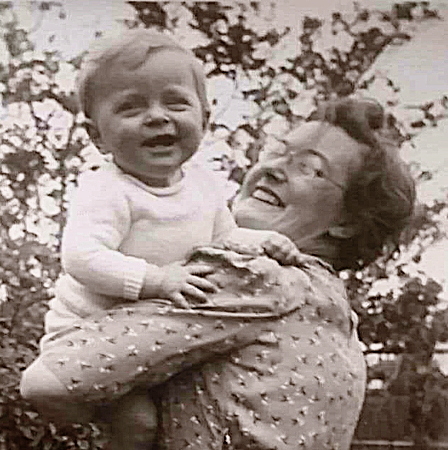
Austin Mac: Print ready file and Final Proof certificate complete and dispatched. All I need now is good photo.
Wednesday 1 October 2025
Back to quantocracy_AJPS
What is my reluctance? Laziness? Subconscious? Relax and think about my book. I like the last line of the blurb and I think it says what I will say in public if I get a voice: “Religion and politics have been bedfellows since time immemorial. The model of creation presented in this book completely rejects the imperial intent of genocidal holy wars.
Quantocracy is flowing well beginning from Aristotle, Plato via Hellenistic Judaism to the Christian god developed by Aquinas and going onto partnership with general relativity to give convenient initial singularity.
§4 Is quantum mechanics the primary source of universal structure introduces the idea that we apply Hilbert space directly to the initial singularity inspired by the Christian notion of Trinity and spend a few paragraphs explaining how this overcomes all the problems associated with continuity and calculus, which apply to gravitation via Riemann, but are inappropriate once [the] universe becomes quantized by Brouwer - god created the integers.
[page 72]
Thursday 2 October 2025
Friday 3 October 2025
As Hawking notes, complex numbers are the formal [periodic] representation of time.
Aquinas’s contribution to the initial singularity is the formal expression of the eternity of a necessary being, essence ≡ existence first expressed in his opusculum De ente et essentia. Thomas Aquinas; De ente et essentia
Aristotle’s discussion of space and place in Physics explains the foundAtion of the [model] by which we expand the concept of fermions and bosons as the occupants of a place to the idea that they create Minkowski space by their very existence. Wicksteed & Cornford (1986): Physics Book IV, part 4
That is, a space of fermions and [massless] bosons is inevitably a Minkowski space and the formal couplings of local Minkowski spaces, at the level of elementary particles gives us, By Einstein’s field equations, Einstein’s model of the universe.
Saturday 4 October 2025
Last, last . . . run through my book.
I shall say that I am a post-Galileian Aristotelian
The more AM make me read through my book the more I like I and see that it is perfect in that it encapsulates everything that I have learnt since I landed in the Dominicans in 1963, 18 yo.
[page 73]
Platonism is in fact bare mathematics, an ancient version of Hilbert’s modern formalism. We all see the same speed of light because light is a formal entity rooted in quantum mechanics which exists before space and time.
I see my book itself as an initial singularity, poised to expand into a new universe of theology, physics and politics which will put the human world on the real trajectory to understanding itself in a way parallel to the work of Jesus of Nazareth . [He provided] a perfect root which was captured by an episcopal bureaucracy and the emperor Constantine to create the imperial theological-military abuser of mankind we all the Roman Catholic Church. We send a copy to the pope and suggest that he promulgate it as his first encyclical.
|
Copyright:
You msay copy this material freely provided only that you quote fairly and provide a link (or reference) to your source.
Further readingBooks
Wicksteed (1986), P H, and F M Cornford, (translators), Aristotle, Physics books I-IV, Harvard University Press, William Heinemann 1986 Amazon customer review: 'Like most volumes in the Loeb series, the emphasis is not on word-for-word precision in the translation, but on acheiving greater readability in broader terms. Since the original text in ancient Greek is provided on the facing page, the editors assume that anyone with a little knowledge of Greek can supplement the looseness of the translation by referring to the original. And in general, the compromises made in this way are good ones throughout the series. In this case, perhaps, the translation may be a little too loose, and also given over to some unfortunate jargon that can distort Aristotle's meaning. But even so, this is still a very useful text for the specialist or the student.' J. Duvoisin "politeia" (Santa Fe, NM United States)
Amazon
back |
Links
Alfio Liotta (2025_09_24), Spectacle, weirdness and novelty: what early cinema tells us about the appeal of ‘AI slop’, ' AI-generated videos and early cinema undeniably emerged from radically different cultural, technological and historical contexts. But their similarities also illustrate the cyclical way in which new image-making technologies emerge, gain traction and provoke debate about artistic value.
A century ago, many dismissed the flickering images of trains and magic tricks as trivial amusements, while today we revere them as foundational works in the film history canon. Will the AI videos we mock now one day be seen as the Lumière reels of their era – crude, imperfect but bursting with the energy of a new way of seeing? ' back |
Mark W, Post (2025_09_30), Hindi, Greek and English all come from a single ancient language – here’s how we know, ' But the preceding sets of words actually are related to one another. They are cognate, which means they share a common origin in descent from a single ancestral language.
This now-extinct tongue was probably spoken somewhere in Eurasia as many as 8,000 years ago. Long predating the advent of writing systems, its words – and its name, if it had one – were never written down. Lacking such direct knowledge, linguists have therefore developed methods for reconstructing aspects of its structure, and refer to it using the label Proto-Indo-European – or PIE.
Our modern-day awareness of the shared ancestry of Indo-European languages first took shape in the Renaissance and early colonial periods.
India-based European scholars such as Gaston Coeurdoux and William Jones were already familiar with the ties among European languages.
But they were astonished to find echoes of Latin, Greek and German in Sanskrit words such as mā́tṛ (mother), bhrā́tṛ (brother) and dúhitṛ (daughter). [. . .]
Like a biological genus, the Indo-European languages became understood as forming a family. At their root was the PIE ancestor, while the descendant languages branched out (like species) to form a tree.
The Indo-European family includes Indo-Aryan languages such as Sanskrit and Hindi; Iranian languages (including Persian and Kurdish); Hellenic (including Greek and Ancient Macedonian); Italic (including Latin, Spanish and Italian); Germanic (including English, Dutch and German); Balto-Slavic (including Russian and Lithuanian) and Celtic languages (including Welsh and Breton), as well as Armenian and Albanian. [. . .]
Alas, spoken languages do not fossilise well. The actual words, ideas and identities of Proto-Indo-European speakers vanished into the air many millennia ago.
Yet patterns in their descendant languages preserve enough structure to enable us to manage at least a shadowy glimpse of them. The theories and methods pioneered through this work will continue to fuel research into the reconstruction of human ethnolinguistic prehistories worldwide for many years to come./ back |
Rachel Fieldhouse & Mohana Basu (2025_10_02), Jane Goodall’s legacy: three ways she changed science, ' Jane Goodall, a British primatologist known for her work with chimpanzees, died on Wednesday 1 October, aged 91. She was in California on a speaking tour and died of natural causes, according to the Jane Goodall Institute. [. . .]
While studying for her PhD at the University of Cambridge, UK, in the early 1960s, Goodall broke with the scientific convention of using numbers to identify animals, assigning them names instead. She named a male chimp with silver facial hair David Greybeard. This change upset senior scientists at the time, but it is now common practice to use animal names. [. . .]
back |
That Obscure Object of Desire - Wikipedia, That Obscure Object of Desire - Wikipedia, the free encyclopedia, ' That Obscure Object of Desire (Cet Obscur Objet du Desir) is a 1977 comedy-drama film directed by Luis Buñuel, based on the 1898 novel The Woman and the Puppet by Pierre Louÿs. It was Buñuel's final directorial effort before his death in July 1983. Set in Spain and France against the backdrop of a terrorist insurgency, the film conveys the story told through a series of flashbacks by an aging Frenchman, Mathieu (played by Fernando Rey), who recounts falling in love with a beautiful young Spanish woman, Conchita (played interchangeably by two actresses, Carole Bouquet and Ángela Molina), who repeatedly frustrates his romantic and sexual desires. The film was nominated for the Academy Award for Best Foreign Language Film at the 50th Academy Awards.' back |
Thomas Aquinas, De Ente et Essentia, Latin text of one of Thomas Aquinas early works.
Textum a L. Baur Monasterii Westfalorum 1933 editum
emendatum a J. Koch ac translatum in taenias magneticas a Roberto Busa SJ. denuo recognovit Enrique Alarcón atque instruxit<
[69871] De ente et essentia, pr.
Quia parvus error in principio magnus est in fine, secundum philosophum in I caeli et mundi, ens autem et essentia sunt quae primo intellectu concipiuntur, ut dicit Avicenna in principio suae metaphysicae, ideo ne ex eorum ignorantia errare contingat, ad horum difficultatem aperiendam dicendum est quid nomine essentiae et entis significetur et quomodo in diversis inveniatur et quomodo se habeat ad intentiones logicas, scilicet genus, speciem et differentiam. Quia vero ex compositis simplicium cognitionem accipere debemus et ex posterioribus in priora devenire, ut, a facilioribus incipientes, convenientior fiat disciplina, ideo ex significatione entis ad significationem essentiae procedendum est.
back |
William Zheng (2025_09_30), Religion must align with law for ethnic and social harmony in China, Xi says, ' Chinese President Xi Jinping has called for further enactment of law and regulation, as well as stricter law enforcement, in religious affairs in a push to Sinicise religions in the country, according to state media.
Xi made the remark on Monday while presiding over a group study session of the ruling Communist Party’s Politburo. [. . .]
Qiushi, the ruling Communist Party’s leading theoretical journal, also weighed in on religious affairs in its latest issue.
It republished a speech by Xi last year in which he argued that the “economic interdependence” of all ethnic groups in China was a “powerful force” to build a unified Chinese economy, despite the country’s vast territory and varying resources between regions.[. . .]
According to Xie Maosong, a senior researcher at the National Institute of Strategic Studies at Tsinghua University, laws and regulations governing religious affairs are critical for officials on the ground responsible for managing religious affairs.
“The laws are the yardsticks to reduce arbitrary administrative decisions while providing the administrators with legal tools to advance national agendas on religious affairs,” he said, adding that China should also strengthen the legal training of grass-roots officials to better implement existing and future laws.
The legal drive is part of the concept of “comprehensive and strict governance over religious affairs” tabled at the National Religious Works Conference chaired by Xi in December 2021.
It detailed Beijing’s continued efforts to Sinicise religions in China, actively guiding them to adapt to China’s socialist society, improving the self-management level of religious leaders, and enacting laws on religious affairs for better governance.' back |
Yuanyue Dang SCMP (2025_09_29), Exclusive | ‘Literary anarchist’ Yan Lianke on Chinese writers, the Nobel prize and censorship, ' Chinese novelist Yan Lianke is considered a strong contender to win the Nobel Prize in Literature. Yan uses magical and absurd imagery to depict the realities of rural China, particularly the lives of ordinary people in the Mao Zedong era. His awards include the Franz Kafka Prize, the Lao She Literary Award and the Lu Xun Literary Prize. Yan is a professor at Renmin University of China in Beijing and a chair professor at the Hong Kong University of Science and Technology. In this interview, the former soldier considers the global status of Chinese literature and discusses the censorship of his books. [. . .]
You once said that censorship was not the biggest obstacle to creating great literature. Do you still hold this view? Do you think that censorship prevents Chinese literature from reaching a global audience?
Indeed, I have said that the most formidable challenge for a writer is not state censorship, but the innate habit of self-censorship cultivated from childhood. When it comes to Chinese writers and literature, the world questions the system of censorship that you mention, which we term “publishing discipline”. I see no reason to evade this issue, and will share some of my reflections. [. . .]
One point must be clarified: literature is not black and white. Adopting Lu Xun’s approach does not mean rejecting Eileen Chang’s. Nor does it mean that if one does not write like Aleksandr Solzhenitsyn or Boris Pasternak, one must inevitably write like Maxim Gorky. After all, China has now undergone over 40 years of reform and opening up, and society as a whole is considerably more tolerant of literature and writers. [. . .]
You were once a PLA soldier. In what ways has your military service influenced your writing? You are known as an author of “banned books”. Does this conflict with your identity as a veteran?
I am grateful for every stage of my life’s journey. My 26 years in the military represent the most significant and prolonged chapter of my life. It was during my service that I started writing, and it was within the army that I became a writer. The seeds of becoming this particular writer were sown during my military service. Thus, my gratitude for those 26 years mirrors how every writer dedicates their entire literary life to honouring their childhood.
Many of my most notable works – such as The Years, Months, Days, Hard Like Water and Lenin’s Kisses – were completed during my time in the military. These 26 years coincided precisely with two decades of profound transformation in Chinese society.
China’s shift from isolation to openness, conservatism to modernity and poverty to prosperity all unfolded during this period. Without those years of military service, I would not be here today. '
back |
Zoya Sheftalovich (2025_09_28), ‘Laughter Can’t Be Put on Trial’: Why Donald Trump Is Afraid of Jimmy Kimmel, ' Now living in Poland, Shenderovich has watched as Donald Trump’s administration has carried out an unprecedented pressure campaign on American comedians and the networks that employ them. “This is a test,” Shenderovich said in an interview with POLITICO Magazine. “Trump is acting like Putin. But he doesn’t have Putin’s resources. The only way he wins is if you surrender.”
Shenderovich says satire remains one of the most potent tools for protecting democracy, because it reveals truths and reaches broader audiences than other forms of political speech. And he says American democracy will persevere as long as the country protects its right to laugh at its leaders.
“Satire is the sharpest instrument of free speech. And the first thing all dictators do is crack down on freedom of speech,” Shenderovich said. “Because in a totalitarian state, you can crush the courts, you can crush elections; you can crush everything. But you can’t crush laughter.” [. . .]
What’s worse, someone who settles scores openly or in secret?
It’s all bad. But open is better. That doesn’t mean Trump is better, but it is better for society to get a warning of impending danger. The American public have received a clear signal of Trump’s authoritarian tendencies, and they are responding to it.
In Putin’s case, a huge number of Russians really believed in him. So many people, even liberals, were on Putin’s side because they believed he was fighting oligarchs, that he was fighting to bring back law and order. He was helped by so many people who are now distancing themselves from him or are even on the run from him. But I remember how these people helped Putin gain a foothold in power and helped him smash an independent television station.
Will Trump manage to bend American democracy to his will?
Trump would love to be Putin, but he won’t succeed for several reasons. Chiefly because of the American traditions of free speech, the separation of powers, the independence of the courts, elections. Trump is finite — and he isn’t just limited by how long he lives, as Putin is.
In his 25 years in power, Putin suppressed all freedom of speech, elections, courts, access to the streets. He has completely subjugated Russia. Trump will not be able to subjugate America, this is quite obvious. This is the most important and fundamental difference.[.. .]
You once said a society, like a person, reaches a point when it passes out from pain, and then you can do anything you want to it. It becomes compliant. When was this moment in Russia.
The point after which Russian society lost consciousness from pain was probably Beslan [the 2004 school siege in which 334 people were killed, including 186 children, after Russian special forces stormed a gym where militants linked to the Chechen separatist insurgency were holding 1,100 people hostage]. Putin had a choice between accepting a political defeat [by allowing Chechen leader Aslan Maskhadov to mediate the crisis] or killing all those kids. And he chose to kill the children.' back |
|